Many Milton homeowners wonder if the onset of winter means all construction must pause. In a climate defined by harsh Canadian winters, concerns about lasting quality and project feasibility are common.
The short answer to this question is a definitive yes. Professional concrete work can proceed, even in freezing temperatures, by controlling the environment and utilizing cutting-edge concrete technology , ensuring the final product delivers the long term durability your property deserves.
Milton’s winter climate is characterized as freezing, snowy, and windy. Daily low temperatures often bottom out around 15°F (approximately -9.4°C) in January, with average high temperatures struggling to exceed 28°F (approximately -2.2°C). These persistent weather conditions present unique challenges for concrete placement.
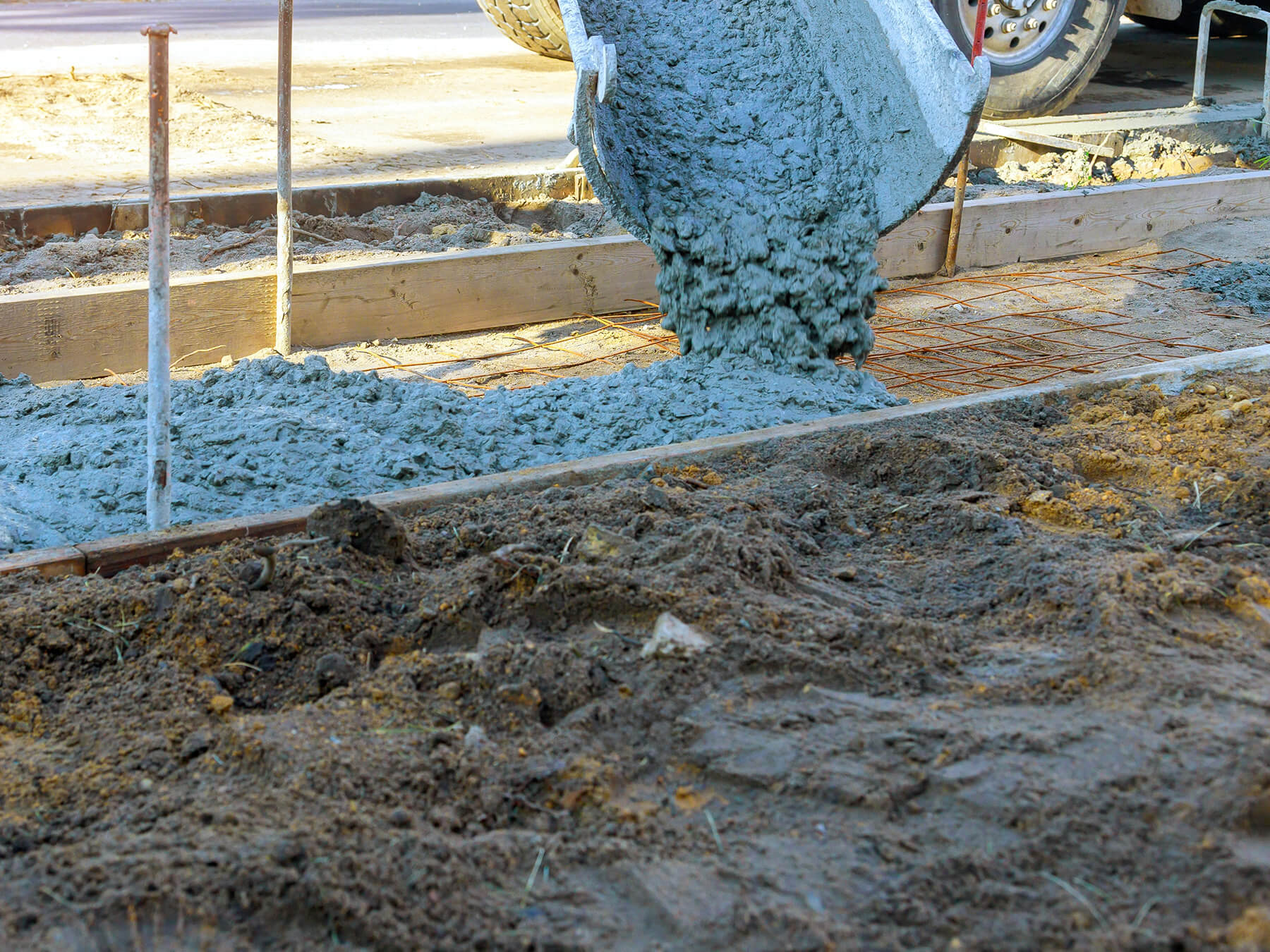
The main difficulty lies in cold temperatures halting hydration, the chemical reaction that allows cement to gain strength. If concrete is exposed to freezing temperatures before it reaches critical strength (500 psi), its structural integrity is fatally compromised, leading to weak spots and severe cracks.
The expansion of water into ice (9%) within the concrete matrix is the most destructive force during harsh Canadian winters. Repeated freeze thaw cycles are inevitable in the Halton region, causing internal stress, micro-cracks, and leading to surface damage and costly repairs. Expert practices are required to withstand this pressure.
Professional concrete work is governed by strict standards, defining cold weather as a period when temperatures dip below 40°F (4°C). To achieve optimal results, the Ontario Building Code (OBC) mandates that concrete must be maintained at a minimum of 50°F (10°C) for 72 hours after placement.
MCL Contracting utilizes advanced concrete technology and customized mixes to combat these unique challenges. This involves using non-chloride accelerators to speed the curing process and reduce heating associated costs. Air-entraining agents are also essential to create microscopic bubbles, dramatically enhancing the durability of the concrete against freeze thaw cycles.
A critical preliminary step is ensuring the ground is thawed. Placing concrete on frozen ground is prohibited, as thawing later causes uneven settlement and severe cracking. Professionals use specialized ground heaters and pre-warm the mixing water and aggregate to promote robust hydration and enhance structural integrity.
To achieve optimal results, temporary enclosures and insulated blankets are used extensively. These structures trap the heat generated by the cement hydration, enhance energy efficiency, and protect the concrete surface from cold winds and rapid temperature drops. This is essential for lasting quality.
If temporary enclosures are used, the heating source must be vented to the exterior. Combustion fumes from fossil fuels can cause premature carbonation on the fresh concrete surface, leading to dusting and reduced durability. Maintaining safety and durability goes hand-in-hand in cold construction.
Many concrete work projects are viable throughout the winter. Smaller outdoor spaces like concrete porch foundations, sidewalks, or basement floors are less exposed and easier to heat. Critical repairs and patching of existing concrete driveways can also proceed using specialized rapid-setting cement.
Large decorative concrete patios, particularly those with stamped or colored finishes, should often be postponed until spring. The intricate surface relies on pristine conditions. Exposing decorative concrete too early to freeze thaw cycles or harsh salt based deicers significantly increases the risk of irreparable surface damage, compromising aesthetic appeal and curb appeal.
For homeowners considering a new driveway, the choice often comes down to concrete driveways versus an asphalt driveway. While asphalt has a lower initial investment, its shorter lifespan (10–20 years) means it requires frequent repairs and replacement.
A properly installed concrete driveway offers exceptional durability and longevity, lasting 25 to 80 years. Over decades, concrete is the more cost effective choice. It requires only infrequent sealing every 5–10 years, offering truly low maintenance compared to the 3–5 year sealing cycle required for an asphalt driveway. This ensures minimal upkeep for busy homeowners.
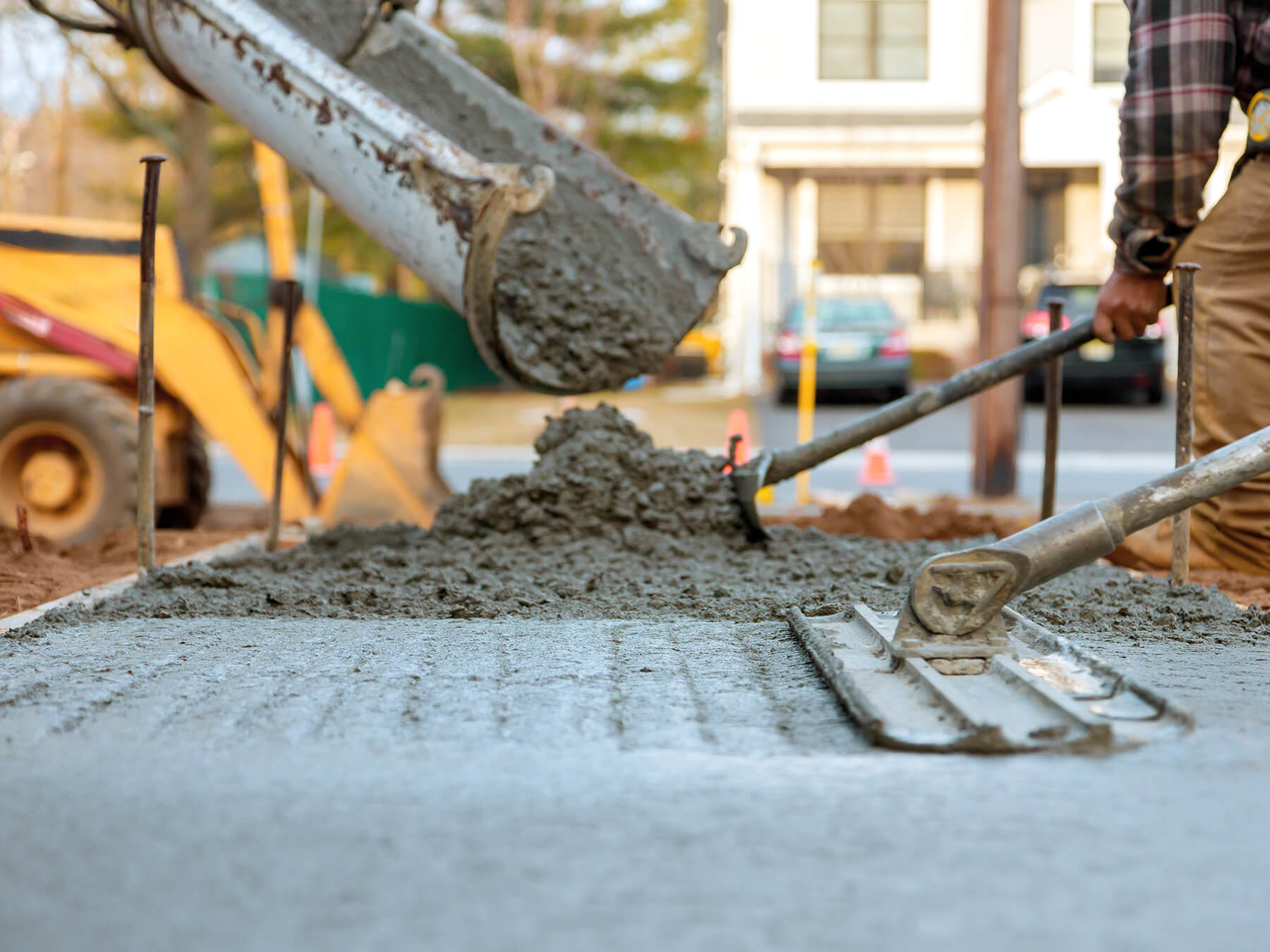
While individual asphalt repairs are typically cheaper, the frequency of repairs for an asphalt driveway is far higher. Significant concrete repairs, though less common, are more expensive (often double the associated costs of asphalt repairs) but provide long term durability. Choosing concrete driveways ensures minimal maintenance and protects your initial investment.
Concrete allows for customization using stone finishes, exposed aggregate, brick, or even complementary wood accents. This design flexibility allows homeowners to truly enhance their personal style. These aesthetics and the rigidity to withstand heavy loads make concrete driveways the preferred choice for maximizing curb appeal and property value.
The most crucial factor in concrete longevity is water management. Ensuring proper drainage prevents water from pooling, avoiding disaster in the winter. Without proper drainage, melted snow and ice can seep into pores, causing water damage and exacerbating the wear and tear that leads to cracks. Drainage solutions must be integral to every walkway and patios project.
Harsh salt based deicers like rock salt (sodium chloride) are highly corrosive and accelerate wear on concrete. The brine created significantly impacts the durability by drawing more moisture into the concrete pores, leading to scaling and cracks.
To protect your walkway and driveway investment, homeowners should prioritize minimal upkeep. Use only concrete-safe alternatives like Calcium Chloride or Calcium Magnesium Acetate (CMA), especially on newer concrete. When clearing snow, use a plastic or rubber-edged shovel to remove dirt and prevent scratching the surface. Perform regular inspections and seal cracks.
Tackling the unique challenges of construction in Milton requires local expertise. Contractors must withstand the specific challenges of Halton till soils, which are susceptible to frost heave. Knowing how to properly thaw the ground and implement vented curing structures is vital to guarantee the structural integrity and prevent costly repairs.
MCL Contracting’s specialized services go beyond basic code compliance to achieve exceptional durability. We integrate superior concrete technology and precise curing protocols into every project, from walkway to concrete driveways and patios. This rigorous approach guarantees high customer satisfaction and preserves your initial investment. Our services enhance the aesthetics and longevity of your outdoor spaces.
Proceeding with concrete work in winter is a strategic decision that offers substantial benefits, from maintaining construction timelines to securing superior durability. By choosing a contractor skilled in cold-weather services, Milton homeowners ensure that their new walkway, concrete porch, or concrete driveways project will withstand the harsh Canadian winters. The result is low maintenance concrete that provides exceptional durability, aesthetic appeal, and unmatched curb appeal.
Ready to enhance your property with concrete driveways, patios, or a new walkway without waiting for spring? Contact MCL Contracting today. Our expert services specialize in providing lasting quality and guaranteed structural integrity, even in the depth of winter. Visit https://mclconcrete.ca/ to consult with a specialist and schedule your project.
Miguel
Residential and commercial concrete services
NEW CONCRETE & CONCRETE REMOVAL
